At Fortitude Nicsa Global, we are more than just a solutions provider—we are a partner in your journey toward greater efficiency, performance, and success. Get in touch with us today.
Last Updated: 24/07/2026
Hamina is a professional Wi-Fi survey and network design platform built in two parts.
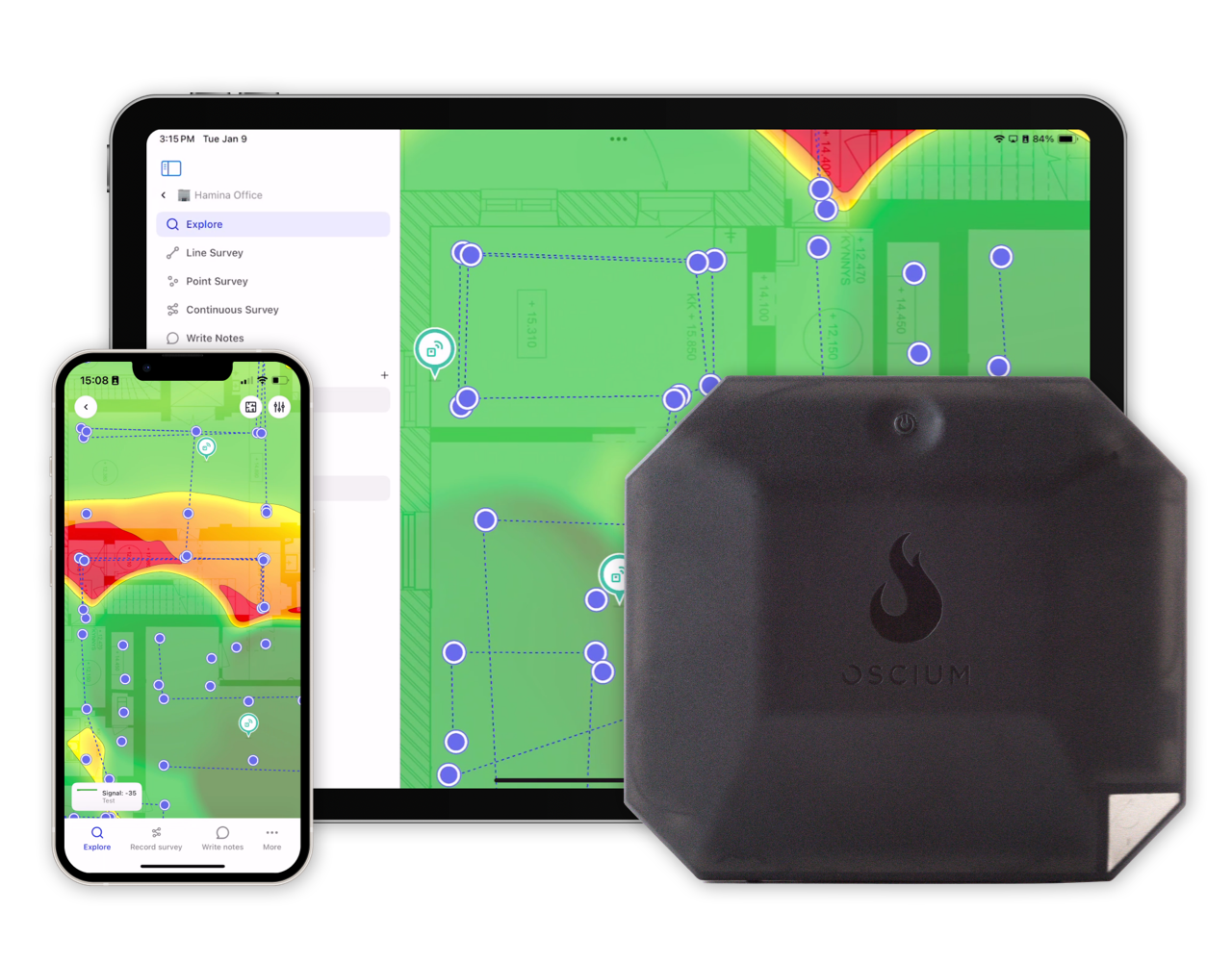
Hamina Onsite is a field survey toolkit. Your engineer uses an iPhone or iPad, paired with the Oscium Nomad Wi-Fi measurement device, to walk a site and capture real-world signal data. The app produces real-time coverage heatmaps across the 2.4 GHz, 5 GHz, and 6 GHz bands as the survey progresses. There’s no waiting until you’re back at a desk to understand what the data is telling you. You see it on the floor, in the moment, where you can act on it.
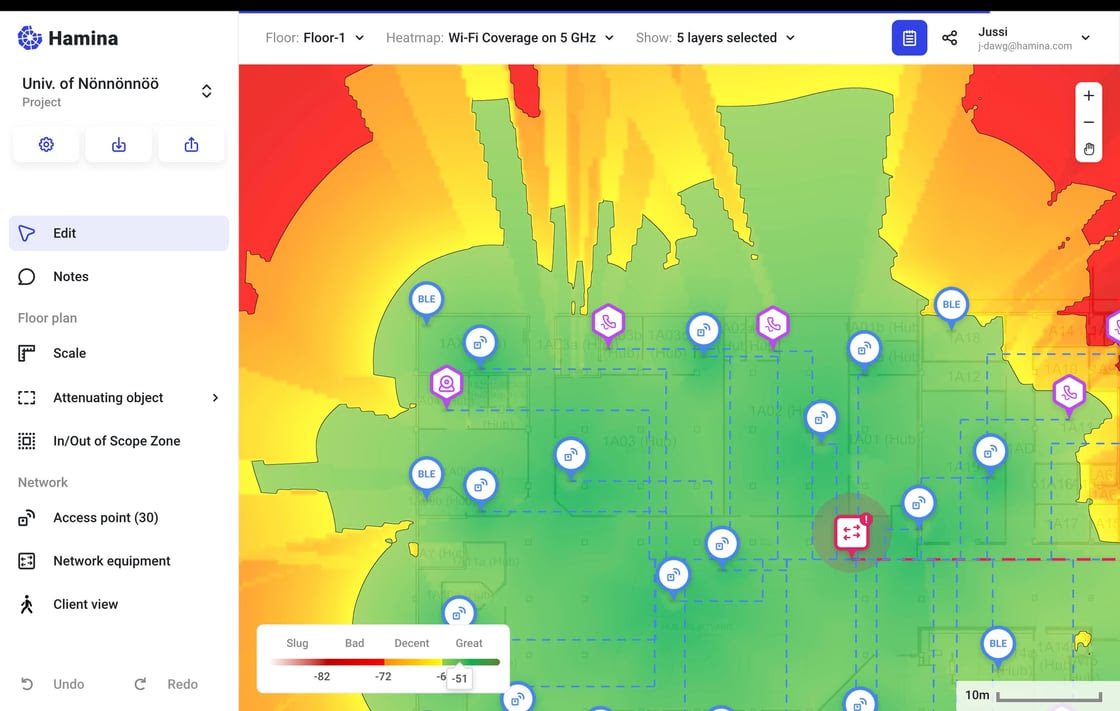
Hamina Network Planner is the cloud-based counterpart. Before a single boot hits the floor, engineers can build a predictive model of the space, floor plans, wall materials, access point placement, and simulate how a wireless network will behave. It’s the planning phase made rigorous rather than guesswork.
Together, they give you a complete picture: what the network should look like in theory, and what it actually looks like in practice. In Japan’s RF environment, the gap between those two things can be significant.
Most enterprise IT professionals understand that building construction affects wireless signal. Japan presents that challenge at scale, in every direction.
Reinforced concrete is everywhere. Japanese construction standards, shaped by decades of earthquake engineering, mean that walls, floors, and ceilings regularly include dense rebar grids embedded in thick concrete. For 2.4 GHz signals this is already problematic. For 5 GHz and the newer 6 GHz band, signal attenuation through these structures can be severe enough to require an access point per room rather than per floor. Getting this wrong at the design stage means ripping out infrastructure after deployment.
Vertical complexity is a different kind of problem. In the UK or US, a wireless survey of a 10-floor building is a repeated pattern, floor by floor, broadly similar. In Japan’s high-density commercial districts, the same building might house multiple tenants across floors with completely different layouts, ceiling heights, and internal structures. Signal bleeds, interference sources, and coverage dead zones don’t follow a simple pattern. Each floor needs its own careful attention.
Urban RF interference is intense. Tokyo, Osaka, Nagoya, these are among the most spectrum-congested cities on the planet. Channel planning isn’t a box-tick exercise here. It’s a requirement.
TELEC compliance is non-negotiable. Japan’s Radio Law and the associated TELEC certification framework impose specific requirements on wireless equipment operating in the country. Transmit power limits, approved frequency bands, and equipment certification all need to be factored into network design from the start. A network that works perfectly from a coverage standpoint but runs outside compliant parameters isn’t a working network, it’s a liability.

Real-time heatmaps mean that an engineer walking a concrete-heavy floor in Shinjuku isn’t working blind. As they move through the space, the Oscium Nomad is capturing actual measured signal strength across all three frequency bands and Hamina Onsite is rendering that into a visual coverage map in real time. When a dead zone appears that the predictive model didn’t anticipate, because a wall turned out to be thicker than the drawings suggested, the engineer sees it immediately and can adjust.
Coverage across 2.4, 5, and 6 GHz matters more in Japan than in many other markets simply because the country has been faster to adopt Wi-Fi 6E infrastructure. Hamina Onsite measures all three directly rather than extrapolating.
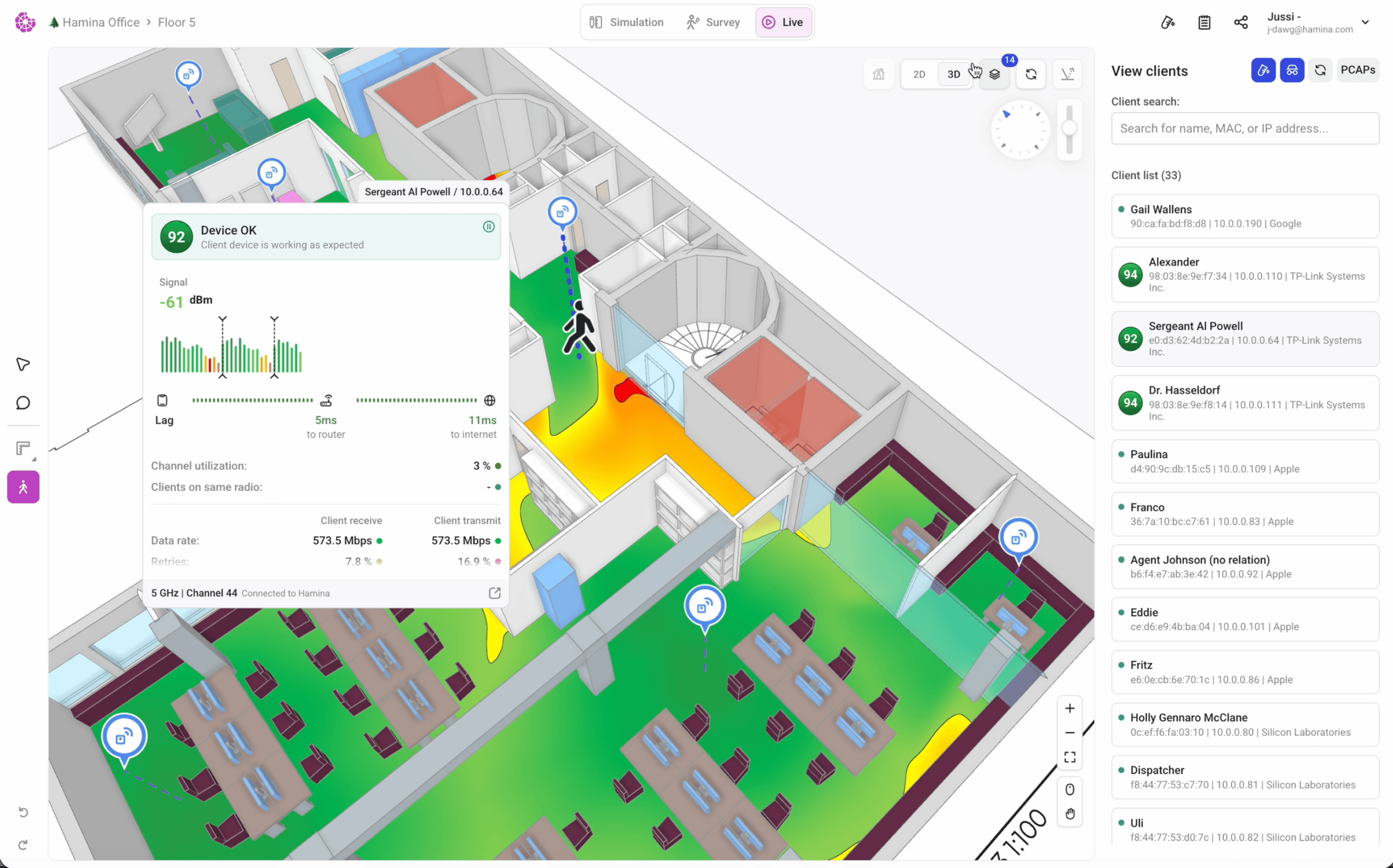
The cloud-based Network Planner also allows FNG’s UK-based reporting team to collaborate in real time with field engineers on the ground in Japan. The data isn’t sitting in a local file on someone’s laptop waiting to be emailed back to Derby. It’s live, centralised, and accessible to the team responsible for producing the client-facing report, which means every report comes out to the same standard, regardless of where the site was.
The cost of a poor wireless survey doesn’t show up in the survey invoice. It shows up three months later.
Coverage gaps that look minor on paper translate to dead zones staff experience every day. Access point placement that seemed logical on a floor plan delivers poor performance because the survey didn’t account for actual wall composition. In Japan specifically, a TELEC compliance failure carries regulatory risk on top of operational disruption, re-specification and replacement of deployed infrastructure is not a minor fix.
Rework is expensive in any country. In Japan, where site access in commercial buildings requires advance scheduling, it’s particularly painful. A thorough Hamina survey at the outset is not an optional extra. It’s risk management.
Wireless surveys account for approximately 50% of FNG’s global revenue. That reflects the genuine commercial opportunity available to VARs, MSPs, OEMs, and Telcos who offer wireless survey capability to their clients.
Clients who need wireless surveys typically already have a relationship with a trusted IT partner. They’re asking their existing partner whether this is something they can help with. If you can say yes, backed by credible delivery capability, you capture that revenue and deepen the relationship. FNG provides that delivery capability. Channel partners don’t need to build or certify their own practice. They work with FNG, who provides the engineers, the tooling, and the reporting.
Once a client provides sign-off, FNG schedules a site visit within one week. Field engineers attend the site and conduct the Hamina survey. Following the site visit, the report is delivered within seven days, produced by FNG’s UK-based accredited team. It includes coverage heatmaps across all measured frequency bands, RF environment analysis, access point placement recommendations, and compliance notes for Japan.
If you’re a VAR, MSP, OEM, or Telco with clients in Japan who need wireless survey capability, or clients anywhere who need wireless surveys delivered to a consistent professional standard book a free discovery call with the FNG team at fortitude-nicsa.com/book-a-discovery-meeting.
Wireless surveys aren’t a side capability for FNG. They’re at the core of what we do.
Want to find out more about our Hamina Wireless Survey Options? Schedule a call with us today to see how we can help.